
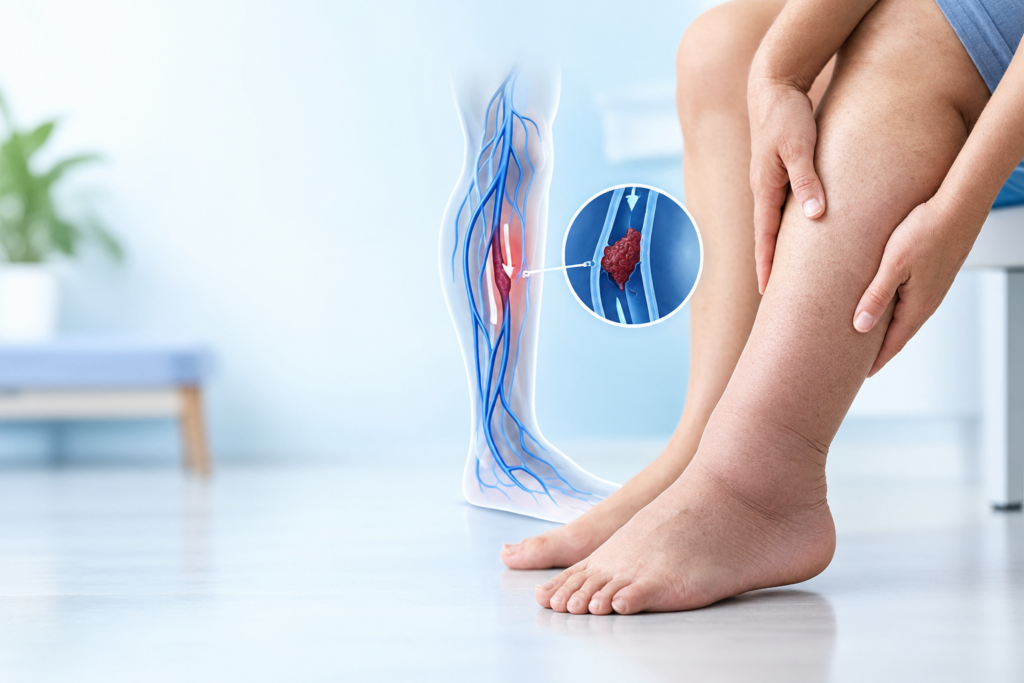
Leg pain and swelling are common complaints, but when they occur repeatedly or without an obvious injury, they may sometimes indicate an underlying vascular problem. Vein and artery conditions can affect blood circulation and cause discomfort, heaviness, swelling, or changes in the skin.
When Could Leg Pain Be Vascular?
One possible cause is venous insufficiency, where the veins have difficulty returning blood efficiently to the heart. This can lead to blood pooling in the legs and may cause swelling, aching, heaviness, or cramping, particularly after prolonged standing.
Another important condition is deep vein thrombosis (DVT), in which a blood clot develops in a deep vein, usually in the leg. Typical symptoms may include swelling, pain or tenderness, warmth, and redness or discoloration. DVT requires prompt medical evaluation because a clot can potentially travel to the lungs and cause a pulmonary embolism.
Arterial conditions can also cause leg pain. For example, peripheral artery disease (PAD) may cause pain during walking or physical activity that improves with rest because of reduced blood flow to the legs.
When Should You See a Vascular Specialist?
Sudden swelling, unexplained leg pain, warmth, redness, or discoloration—especially when affecting one leg—should not be ignored. Diagnosis may involve a clinical examination and vascular imaging such as duplex ultrasonography, depending on the suspected condition.
If you are experiencing persistent or unexplained leg pain and swelling, consulting a vascular surgeon in Ahmedabad can help identify whether a vein or artery problem is contributing to your symptoms. Early assessment can help guide appropriate treatment and prevent complications.
For vascular evaluation and treatment, visit Dr. Vishal Sheth – Prime Vascular Care.
This article is for general information and does not replace medical evaluation. Sudden leg swelling with chest pain or difficulty breathing requires emergency medical attention.
